
For this reason, in my view, the issue is not only whether it is possible to obtain similar results from random selections, but whether it is possible to obtain them while respecting comparable selection constraints.
A statistical analysis would certainly be useful; however, the results should not be considered in isolation, but rather interpreted in light of possible structural connections between the selected characters. For example, one could check whether there are regularities in the origin of the letters: pages with certain numerical relationships (such as multiples of 3), or letters that systematically come from the same page or from pages sharing common features.
In the case I am analyzing, the letters are not simply “seven out of many,” but come from a very specific subset: pages from which only a single character was cut. This introduces a strong constraint, as it effectively removes any degree of choice within each page.
From this perspective, the analysis should therefore not only assess how many combinations produce apparently meaningful results, but also how many of those respect a selection structure comparable to the one observed. Only in this way can we evaluate whether we are dealing with a purely combinatorial effect or with something that shows a higher degree of internal coherence.
In other words, it is not enough for a sequence to “work”; we also need to understand whether the way it is constructed follows a recognizable pattern, or whether it remains compatible with a purely random process.
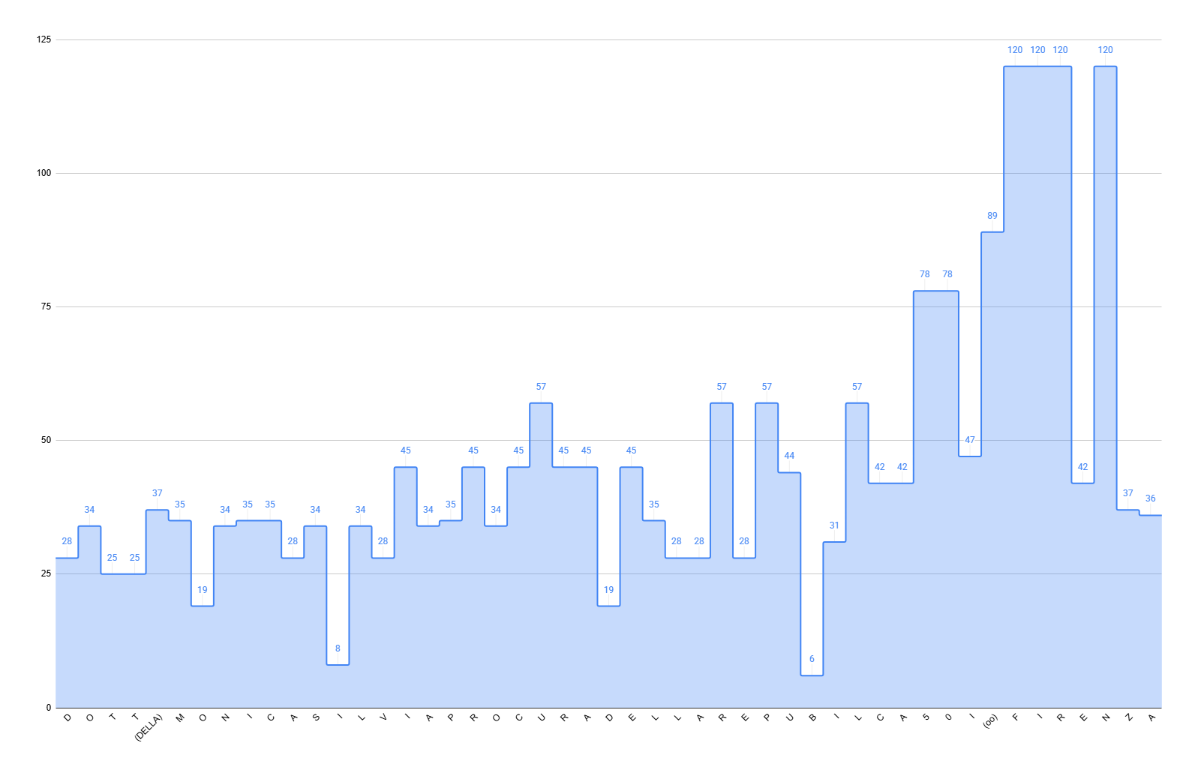

From this perspective, the analysis should therefore not only assess how many combinations produce apparently meaningful results, but also how many of those respect a selection structure comparable to the one observed.
So, to this I would ask: in what way would the random selection of ‘DEAMONI’ be unable to “respect a selection structure comparable to the one observed?”
All I would need to do is make a selection of letters from the magazine ensuring that the ones currently cut from a single page are not found to be such, whilst the letters of ‘DEAMONI’ are selected in the required way.
“This isn’t right! It’s not even wrong!”—Wolfgang Pauli (1900–1958)
DEAMONI may well be a valid example as a final outcome (and a statistical analysis might reveal other similar cases), but for it to be truly comparable to IUBILAE, it would be necessary to clarify whether the characters can be traced back to a coherent selection process that links them together. Or am I mistaken?
Sorry, I’ve run out of time, I’m heading to bed! In any case, some statistical modelling needs to be done, both for the formation of a word like IUBILAE and for the selection of the full set of characters. I hope I can manage it, although I don’t really have the skills for it unfortunately. Good night!
In the case I am analyzing, the letters are not simply “seven out of many,” but come from a very specific subset: pages from which only a single character was cut. This introduces a strong constraint, as it effectively removes any degree of choice within each page.
It would appear that this is the very point on which we are currently making very different interpretations.
For myself and, as I would argue, also according to statistical analysis, simply because of the “specific subset” constraint that you are wanting to claim is intentional, it is for this reason that we must take it to be random (as the ‘null hypothesis’) and then show that, despite our doing so, our result shows statistical significance.
If we limit our analysis at the start to only the subset you have identified (which comprises the only letters that are de facto taken uniquely from a single page) and start our analysis from there, then we would reach a very unhelpful answer to your initial question.
We would find:
- as the actual 7 unique letters do, and must, form ‘IUBLIAE’, then we can say that we can meet the first criterium—that they form a “semantically coherent” word (in Latin)—is met with 100% certainty, hence a probability of 1;
- this probility is then unchanged when we factor in the requirement that, through a fixed shift, we must be able to produce a “meaningful term” of 6 letters—we do, and must, have ‘SLAVES’ here with certainty;
- this further probability is likewise unchanged when we require that the remaining letter evaluates to 14—and, of course, we do, and must, have ‘O’ remaining.
Thus, we can see that this way of thinking is not the correct one, from a statistical point of view, as it leads to the result that the answer to your initial (original) question would come out as “The probably that … is 1 (100% certainty).”
And I don’t think that this is the meaningful answer you would be looking for. 🤔
“This isn’t right! It’s not even wrong!”—Wolfgang Pauli (1900–1958)
DEAMONI may well be a valid example as a final outcome (and a statistical analysis might reveal other similar cases), but for it to be truly comparable to IUBILAE, it would be necessary to clarify whether the characters can be traced back to a coherent selection process that links them together. Or am I mistaken?
Ah, yes. Now I think I understand and, certainly, this would need to be the case. I guess I am happy merely to take this as assumed, given Vecchione’s discussion of the magazine and the fact that it has so many pages. To reconstruct a 50+ character text from this edition whilst being able to chose any set of seven characters to be taken uniquely from a single page would, in this case, be a task I would assume to be trivially possible.
To be correct on this point, however, we should, as you say, undertake a formal analysis to show that this is possible.
“This isn’t right! It’s not even wrong!”—Wolfgang Pauli (1900–1958)
DEAMONI may well be a valid example as a final outcome (and a statistical analysis might reveal other similar cases), but for it to be truly comparable to IUBILAE, it would be necessary to clarify whether the characters can be traced back to a coherent selection process that links them together.
So, let’s try to do exactly that with this example.
The text we have on the envelope (words only considered for this test exercise) is:
DOTT DELLA MONICA SILVIA PROCURA DELLA REPUBLICA FIRENZE
As a fairly comprehensive collection of heading sources (similar font) from Gente that we have available, we may use letters from pages:
  4. UN EUROPA VERAMENTE UNITA POTRA
  5. COMPETERE CON AMERICA E GIAPPONE
  6. NELL INFERNO DI BHOPAL TRA LA
  7. GENTE CHE GRIDA AIUTO NON VEDO PIU
  8. QUANDO IL PROGRESSO UCCIDE
 12. GLORIA GUIDA ECCO LA MIA GUENDALINA
 13. E BELLISSIMA E ASSOMIGLIA AL SUO PAPA
 17. FA L ATTORE PER SALVARE I CANI CIECHI
 18. SI IN UN LIBRO
 19. DIRO LA VERITA SU DANIELA BONGIORNO
 21. PENSIONI 1985 ECCO CHE COSA CAMBIA
 24. HO AVUTO UN BAMBINO A UNDICE ANNI NON
 25. PREOCCUPATEVI PER ME SONO TANTO FELICE
 28. ALBERTAZZI VORREI ESSERE UNA DONNA
 31. CAFFE SPLENDID ALTO INDICE DI GRADIMENTO
 34. SALERNO QUANDO VOLEVA LA DROGA
 35. MIO FIGLIO MI PICCHIAVA A SANGUE
 36. CARE DOLCI ACQUE NON VI RICONOSCO PIU
 37. QUI E FINITO IL SOGNO DELLA MIA INFANZIA
 44. LE SUE ULTIME PAROLE SONO STATE
 45. MAMMINA FAMMI MORIRE A CASA
 57. L UOMO CHE HO AMATO DI PIU SALVO RANDONE
 83. GIANNI ADDIO PORTO CON ME I NOSTRI FIGLI
 89. UN PO PIU PICCOLA MA SEMPRE GRANDE
 94. IO IL FIGLIO DI FARUK SONO ANCORA RE
 95. DELL EGITTO PER LA LEGGE DEL MIO PAESE
 98. IL GIALLO DEI TORTELLINI LI HA INVENTATI UN
 99. AMMIRATORE DI VENERE O UNA CONTADINA
106. NO NON SOLO
107. UNA SIGNORA IL MIO NOME E LUCIFERO
110. SONO STATO L ULTIMO ATLETA PURO
111. DOPO DI ME IL DILUVIO DEI ROBOT
Using only unique page sources for the letters of ‘DEAMONI’, we can select these as follows:
D	p.  6
E	p.  7
A 	p.  8
M 	p. 12
O 	p. 13
N 	p. 17
I 	p. 18
[cont…]
“This isn’t right! It’s not even wrong!”—Wolfgang Pauli (1900–1958)
[…cont.]
This leaves us with:
  4. UN EUROPA VERAMENTE UNITA POTRA
  5. COMPETERE CON AMERICA E GIAPPONE
 19. DIRO LA VERITA SU DANIELA BONGIORNO
 21. PENSIONI 1985 ECCO CHE COSA CAMBIA
 24. HO AVUTO UN BAMBINO A UNDICE ANNI NON
 25. PREOCCUPATEVI PER ME SONO TANTO FELICE
 28. ALBERTAZZI VORREI ESSERE UNA DONNA
 31. CAFFE SPLENDID ALTO INDICE DI GRADIMENTO
 34. SALERNO QUANDO VOLEVA LA DROGA
 35. MIO FIGLIO MI PICCHIAVA A SANGUE
 36. CARE DOLCI ACQUE NON VI RICONOSCO PIU
 37. QUI E FINITO IL SOGNO DELLA MIA INFANZIA
 44. LE SUE ULTIME PAROLE SONO STATE
 45. MAMMINA FAMMI MORIRE A CASA
 57. L UOMO CHE HO AMATO DI PIU SALVO RANDONE
 83. GIANNI ADDIO PORTO CON ME I NOSTRI FIGLI
 89. UN PO PIU PICCOLA MA SEMPRE GRANDE
 94. IO IL FIGLIO DI FARUK SONO ANCORA RE
 95. DELL EGITTO PER LA LEGGE DEL MIO PAESE
 98. IL GIALLO DEI TORTELLINI LI HA INVENTATI UN
 99. AMMIRATORE DI VENERE O UNA CONTADINA
106. NO NON SOLO
107. UNA SIGNORA IL MIO NOME E LUCIFERO
110. SONO STATO L ULTIMO ATLETA PURO
111. DOPO DI ME IL DILUVIO DEI ROBOT
to make up the remaining:
DOTT LL CA SILVIA PROCURA DELLA REPUBLICA FIRENZE
[cont…]
“This isn’t right! It’s not even wrong!”—Wolfgang Pauli (1900–1958)
[…cont.]
which we can do readily with:
19. DIRO LA VERITA SU DANIELA BONGIORNO
25. PREOCCUPATEVI PER ME SONO TANTO FELICE
28. ALBERTAZZI VORREI ESSERE UNA DONNA
57. L UOMO CHE HO AMATO DI PIU SALVO RANDONE
being sure to not leave any one of these letters alone from a single page.
“This isn’t right! It’s not even wrong!”—Wolfgang Pauli (1900–1958)
In your example, the process starts from a word chosen in advance (DEAMONI) and then shows that it is possible to construct a selection of pages compatible with it. In this sense, it correctly demonstrates that such a structure is achievable, and it is likely that other coherent examples could also be found.
However, there are some aspects of the actual material which, in my view, deserve to be taken into account.
For instance, if we assume that the author cut out a number of letters from the magazine and then used them (perhaps by collecting them in a container or selecting them progressively) it raises the possibility that the envelope was constructed in multiple stages. This is also suggested by some evident differences in the fonts between parts of the text, such as between “DOTT. DELLA MONICA SILVIA REPUPUBL” and “CA 50I00 FIRENZE”.
Moreover, by looking at the distribution of the letters and their sources, it seems plausible that entire titles or full pages were not cut out, but rather more specific portions, such as individual words. Some examples appear to point in this direction:
- p. 45 → “MORIRE”, “A”, “CASA”
- p. 34 → “QUANDO”, “SALERNO” (to clarify, the “O” in PROCURA comes from SALERNO and not from QUANDO — this was an earlier transcription error on my part)
- p. 120 → “TRIONFATO”
From this perspective, it appears more plausible that the selection was made at the word level rather than from entire titles. If the author had worked across the whole block of text, it would be less straightforward to explain the repeated use of multiple characters taken from the same word.
For example, in the case of page 45, from a sentence such as “LE SUE ULTIME PAROLE SONO STATE: MAMMINA FAMMI MORIRE A CASA”, several letters used can be traced back specifically to the word “MORIRE” (such as R–I–R). This kind of recurrence seems more consistent with a targeted selection at the level of individual words rather than a uniform extraction from the entire page (or even just the single section, such as “MAMMINA FAMMI MORIRE A CASA”).
It certainly does seem possible, perhaps even likely, that the author of the envelope first began by cutting out words rather than individual letters from the pages of the magazine. We could then imagine, as a possibility, that in some instances he foresaw that he could use several letters from the one word in his hand and, in other instances, perhaps missed this foresight. You could, then, analyse specifically the use and distribution of letters coming from one and the same word. I am not sure, however, what conclusive, or even compelling, indications you could obtain from such an analysis that would point towards intentionality specifically as to the selection for ‘IUBLIAE’.
The change of letter type for the last line is interesting, as is the idea that he constructed the letter in several stages.
Plausibly, we might imagine that the author had reached the end of the third line, become frustrated that he had already misspelled ‘REPUBBLICA’ and had even then run off the end of the envelope also and, for a period, gave up on this attempt only to return to it later having controlled his frustrations. In the meanwhile, however, it could be easily imagined that, in his initial dismay, he had actually picked up all the words and letters he had originally cut out and had disposed of them. Coming back to the task, then, he would be forced to re-cut a new set of words/letters.
In this scenario, from the fact that in the last line he uses different text sizes and fonts, it might appear plausibe to assume that in the first cutting of words he had completely exhausted (and then discarded) all those in the primary font.
“This isn’t right! It’s not even wrong!”—Wolfgang Pauli (1900–1958)
To take these ideas a little further, we can perhaps notice a difference of method in the construction of the words of the last line compared to the preceding lines.
Over the last line, it would appear much more probable that he was working with words initially, rather than letters. If you trace the selection through in this line, you can see evidence of the author staying with the letters available in the word he has at hand, where this is possible, but having to select a different word when the letter he is looking for is not readily available.
Again, limiting the analysis to just the words at this point we see the following telling pattern of choices:
- ‘C’ from ‘FINISCE’
- ‘A’ from ‘MAI’ (no ‘A’ in ‘FINISCE’)
- …
- ‘F’ from ‘TRIONFATO’
- ‘I’ from ‘TRIONFATO’
- ‘R’ from ‘TRIONFATO’
- ‘E’ from ‘SCOPRIRE‘ (no ‘E’ in ‘TRIONFATO’)
- ‘N’ from ‘TRIONFATO’ (no ‘N’ in ‘SCOPRIRE’)
- ‘Z’ from ‘INFANZIA’ (no ‘Z’ in ‘TRIONFATO’)
- ‘E’ from ‘ACQUE‘ (no ‘E’ in ‘INFANZIA’)
If, then, we compare this to the beginning, we find something different, more suggestive of working with letters rather than words:
- ‘D’ from ‘DONNA’
- ‘O’ from ‘QUANDO‘ (why not from ‘DONNA’?)
- ‘T’ from ‘TANTO’
- ‘T’ from ‘PREOCCUPATEVI’ (why not also from ‘TANTO’?)
“This isn’t right! It’s not even wrong!”—Wolfgang Pauli (1900–1958)
It is difficult to give a truly analytical answer, given the number of factors involved. At this point, I would add another layer of complexity.
The magazine used dates back to late 1984, while the crime took place in September 1985. If the selection of letters was random, we might simply assume that the author used an old magazine he had at hand. If, on the other hand, we consider the possibility of an intentional choice, then we should ask why he selected that specific magazine and not another, perhaps because he was drawn to certain contents or themes?
It is also worth noting that this was a weekly magazine with TV listings, covering (if I am not mistaken) the period from December 14 to 20. Does that timeframe suggest anything to you?
Another interesting detail concerns the word “DELLA”: in the first instance it appears as a single cut-out, while in the second it is composed of individual letters. According to researcher V. Vecchione, this difference may not be accidental. The use of the first “DELLA” as a single block could have been intentional, allowing investigators to trace the source magazine through the back of the clipping, as it is larger and more identifiable. In fact, it is precisely thanks to that fragment that the magazine was identified, whereas the other cut-outs are too small to provide the same kind of information.